Good to know: the tips, figures and codes below come from fire-safety agencies, manufacturer support pages, owner's manuals and commonly reported repair data. They're general guidance, not an inspection of your dryer or your home's vent, and they don't replace a check-up by a professional. If something seems off, stop using the dryer and call a technician.
Why check the vent before winter?
The U.S. Fire Administration (USFA) counted about 2,900 clothes dryer fires a year in U.S. homes from 2008 to 2010, causing about 5 deaths and 100 injuries a year. Those fires were more common in fall and winter and peaked in January, with 11% of the year's fires. The USFA suggests heavier clothing and less line-drying outdoors play a part. In practice that means more sweaters, towels and bedding going through the dryer.
The leading factor was failure to clean: 34% of dryer fires in 2008 to 2010, and still 31% in 2018 to 2020. Dust, fiber and lint was the first thing to catch fire in 28% of them. The good news: most of the check is something you can do yourself.
How do I check my dryer vent? (4 steps)
Unplug the dryer before you move it. Then work from the inside out:
- The lint screen. Clean it before or after every load. Pull it out, vacuum the slot it sits in, and wipe lint from around the drum opening. Never run the dryer with the screen missing or torn.
- The duct behind the dryer. Slide the dryer out gently. The duct between the dryer and the wall should be metal, as short as the space allows, and free of crushed spots or sharp bends. Vacuum lint off the floor and the back of the dryer while it's out.
- The duct itself. Loosen the clamps, pull the duct off the dryer and the wall, and clear the lint you can reach with a vacuum or vent brush. Put it back and tighten both clamps. Manufacturers say to use clamps, not screws, which catch lint.
- The outside vent. With the dryer running on heat for 5 to 10 minutes, go outside. The flap should open and you should feel strong, warm air. Clear lint from the hood, free a stuck flap, and look for a bird or animal nest. In winter, keep snow, ice and plants away from it.
Have a gas dryer? Move it slowly so you don't kink or strain the flexible gas connector. If you ever notice a gas smell, don't use switches or the dryer. Go outside and call Nicor Gas at 888-642-6748 or 911 from there. Leave the gas line itself to a professional.
What does the "Check Vent" light or code mean on my dryer?
Many newer dryers watch their own airflow and warn you when the vent is restricted. These are airflow warnings, not a broken dryer, in most cases. Here's what the common brands show:
| Brand | What you see | What it means |
|---|---|---|
| Whirlpool, Maytag, KitchenAid, Amana | Check Vent light or AF | Restricted airflow: a clogged lint screen or vent, or a vent that's crushed, kinked or has too many turns. On models with the light, it appears during automatic cycles. The dryer keeps running, but drying takes longer. |
| Samsung | Vent Sensor / Vent Check icon | Samsung says the icon lights up when the duct is about 60% clogged and blinks at about 80%. Some models also have a built-in Vent Blockage Test. |
| LG | Flow Sense bars, d80 d90 d95 | About 80%, 90% and 95% blockage. LG says the dryer may shut down to prevent overheating. On gas models, d80 can also point to a gas supply problem. |
| GE | Check Vent alert | The sensor found low airflow. GE says to clean the vent as soon as possible, and at least once a year even without the alert. |
| Miele (heat pump) | Clean out airways | Lint buildup. Clean the lint filters in the door opening and the plinth filter at the bottom front. |
Codes and lights vary by model. Check your owner's manual, and treat these as general guidance, not a diagnosis.
The light is still on after I cleaned the vent
Give it a few loads. LG says Flow Sense needs several cycles in a row before it resets. Samsung notes that if the light comes back after a cleaning, the duct may simply be too long or have too many bends, which isn't a dryer failure but does mean slower drying. If the whole duct is clear, short and straight and the warning still shows, a sensor or the blower fan may be at fault. That's a job for a technician.
Brand notes: everyday and high-end dryers
Whirlpool, Maytag, KitchenAid, Amana
They say to clean the outside venting every one to two years, or sooner when drying slows. Whirlpool and Maytag also sell a dryer vent test kit.
Samsung
Even if the dryer passes its Vent Blockage Test, Samsung says to clean the vent once or twice a year. Run the test when the dryer is cool.
LG
LG suggests a deep vent cleaning every 6 to 12 months and says to check every section of duct for crushed or damaged spots.
GE
GE manuals warn that a vent longer than allowed means longer drying, a shorter dryer life and lint buildup that can become a fire hazard.
Bosch and Miele: no outside vent, but still lint
Bosch's 500 and 800 Series heat pump dryers and Miele's heat pump dryers are ventless. They don't need a duct to the outside, so most of the steps above don't apply. They still need lint care. Clean the lint filter after every load. Miele also has a plinth filter at the bottom front, and its display tells you when to clean it. Bosch's 500 Series has a self-cleaning condenser, while some other condenser models need the condenser cleaned by hand, so follow your manual. Ventless dryers may take longer to dry, which is normal.
Brand details come from each manufacturer's own support pages and manuals. Your model may differ. If the warning won't clear or the dryer acts up, have a professional check it.
Which duct should my dryer have?
The Consumer Product Safety Commission (CPSC) advises replacing plastic or foil accordion duct with rigid or semi-rigid metal duct, which most manufacturers specify. Plastic and foil trap lint and crush easily, which cuts airflow.
The model code the USFA cites (the 2012 International Residential Code) says the dryer must vent straight outdoors, never into an attic, soffit, ridge vent or crawl space. It sets the duct at 35 feet, shorter for each turn, and limits the flexible connector behind the dryer to 8 feet, never hidden inside a wall. Some dryer manuals allow a longer run, and every brand's limit drops with each elbow. For example, one GE manual allows 90 feet of 4-inch rigid metal duct with no elbows but only 25 feet with four. Your local building department has the final say.
A cover on the outside vent should keep out rain, snow and pests, but the USFA warns against wire screen or cloth over the opening, because it catches lint.
How often should a dryer vent be cleaned?
The National Fire Protection Association (NFPA) says to clean the lint out of the vent pipe at least once a year, or sooner if clothes start taking longer to dry. Manufacturers say about the same: once a year from GE, once or twice a year from Samsung, every one to two years from Whirlpool and Maytag. Before winter is a good time.
Long ducts need more attention. The USFA explains that in a long run or one with many bends, moisture in the exhaust condenses inside the duct and lint sticks to it. If your dryer is upstairs, in a closet or in the middle of the house, the hidden part of the duct is a job for a dryer vent cleaning service.
What are the signs of a clogged dryer vent?
| What you notice | What it usually means | Next step |
|---|---|---|
| Clothes still damp, or it takes two cycles | Lint screen or vent restricted | Check yourself |
| Weak or no air at the outside flap | Clog, crushed duct or stuck flap | Check yourself |
| Lint around the outside hood or behind the dryer | Loose joint or blocked hood | Check yourself |
| Check Vent light, Flow Sense bars or d80 | The dryer detected low airflow | Clean vent first |
| Clothes or dryer top hotter than usual | Poor airflow or a failing part | Stop · call a pro if it persists |
| Burning smell, or the dryer shuts off mid-cycle | Overheating; possible thermostat or fuse issue | Stop · call a pro |
The CPSC lists damp clothes and slow drying as signs of a blocked screen or duct, and the USFA adds clothes that come out hotter than usual.
I cleaned the vent. Is the dryer itself fine now?
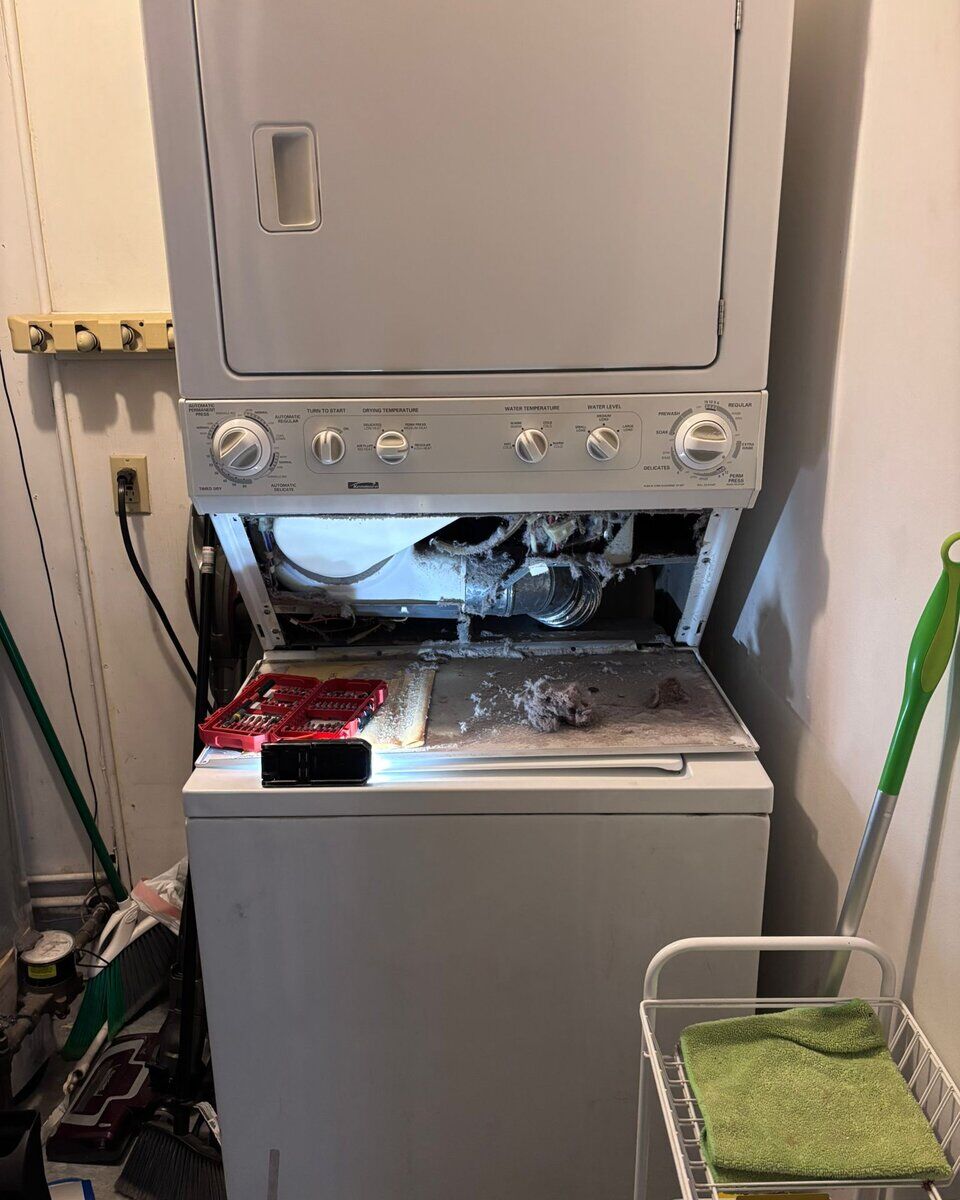
Not necessarily. A dryer and its vent are two separate systems. I've had customers surprised that a dryer fresh from a repair can still be pushing air into a clogged duct, so the vent deserves its own check. It works the other way too: a clean vent won't fix a failing part. Lint also gathers inside the cabinet, past the screen, where you can't reach it. The CPSC recommends having a qualified service person clean the inside of the dryer periodically.
When to stop and call a technician
- The vent is clear, but the dryer runs very hot or shuts off partway through.
- It won't heat at all after you've cleaned the vent.
- You smell something burning when it runs.
- A vent warning keeps coming back with a short, clean, straight duct.
Unplug it and stop using it. These can point to a thermostat, thermal fuse, heating element or blower, and testing them means working near live electrical parts or gas. If you ever see smoke or flames, get everyone out and call 911.
Simple habits that lower the fire risk
- Don't overload the dryer.
- Keep boxes, cleaning supplies and clothes away from it.
- Turn it off when you leave home or go to bed.
- Plug it straight into a wall outlet, never an extension cord.
- Don't dry rubber-backed bath rugs or anything with foam, rubber or plastic.
- Wash clothes soiled with gasoline, cooking oil, solvents or wood stain more than once, and hang them to dry if you can. If you use the dryer, the CPSC says use the lowest heat with a cool-down, and don't leave the warm clothes piled up.
- Have a gas dryer's gas line and connection checked by a qualified professional.
Frequently asked questions
Can I clean my dryer vent myself?
Yes, the lint screen, the short duct behind the dryer and the outside hood are usually safe to clean yourself with the dryer unplugged. A long duct running through walls, an attic or the roof is a job for a dryer vent cleaning service.
Why is my dryer taking two cycles to dry?
The most common reason is restricted airflow from a full lint screen or a clogged, crushed or overly long vent. If the vent is clear and it still takes two cycles, the dryer may have a heating or sensor problem.
What does d80 mean on an LG dryer?
LG says d80 means the Flow Sense system detected about an 80% exhaust blockage. d90 and d95 mean about 90% and 95%, and the dryer may shut down. Clean the lint screen and vent, then run a few loads so the warning can reset.
Do ventless dryers need vent cleaning?
No outside vent, so no duct to clean, but heat pump and condenser dryers from brands like Bosch, Miele, LG and GE still need their lint filters cleaned after every load and their condenser or plinth filter cleaned as the manual says.
What to have ready when you call
The brand and model number (on a label, often inside the door or on the back), whether it's gas or electric, what it's doing, any light or code on the display, and whether you've already cleaned the vent.
We charge an $89 diagnostic fee, credited toward the repair if you go ahead. We don't quote repair prices over the phone; you get the full repair cost after the diagnosis and before any work starts.
Reminder: this guide is based on statistics, manufacturer guidance and common reports. It can't see your dryer or your duct. When in doubt, always call a professional.