Good to know: the causes and codes below are the ones most often reported in manufacturer guides and repair data. They're general guidance, not a diagnosis of your dishwasher, and they don't replace an inspection by a professional. Codes mean different things on different brands, so always check the manual for your exact model, and call a technician when in doubt.
Is a little water in the bottom normal?
Often, yes. A small amount of water below the filter is normal on many models. Whirlpool says it keeps the seals from drying out, and Cove says water under the filters in the sump is normal. If water covers the bottom of the tub after a full cycle, start with the filter.
Step 1: Clean the filter (and check the pump cover)
- Turn the dishwasher off and switch off its breaker before reaching into the tub.
- Slide out the lower rack. Remove the filter as your manual shows, rinse it under running water and clear the mesh with a soft brush.
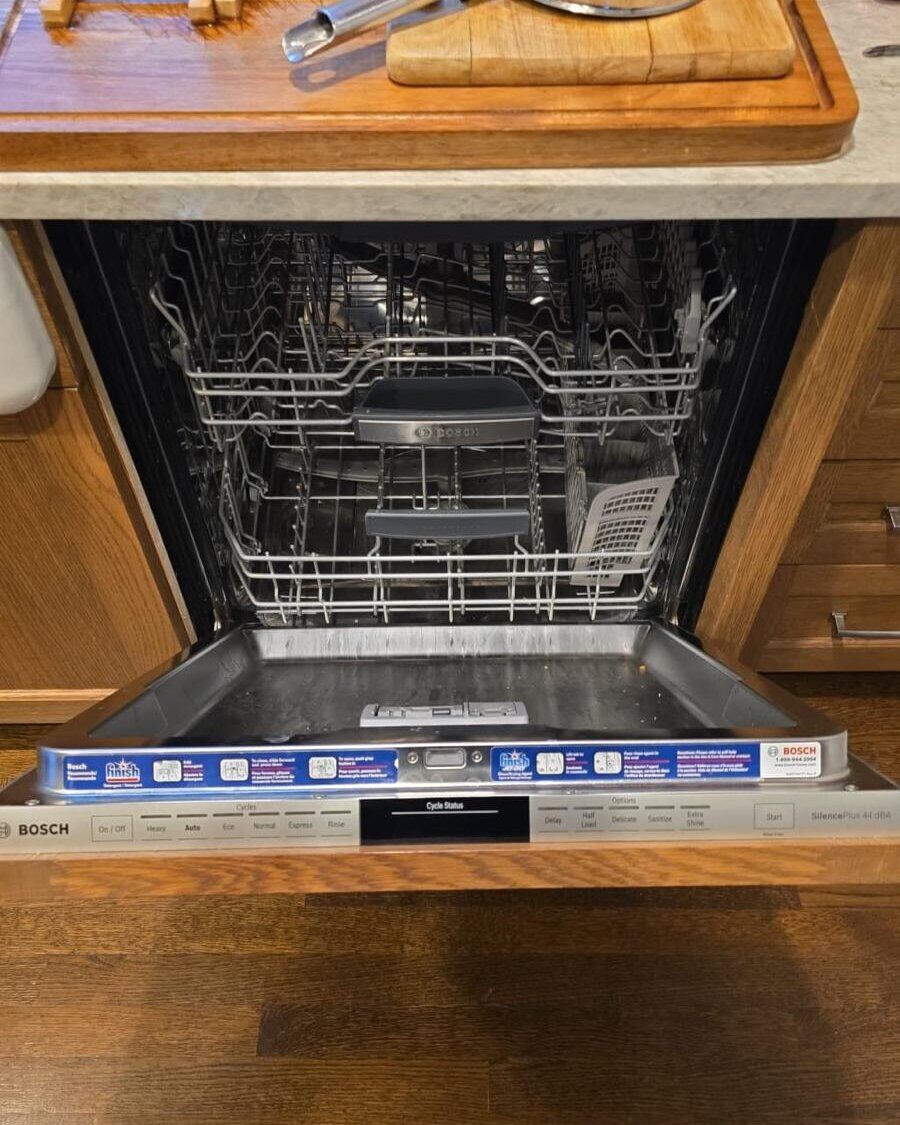
- Sponge out standing water. Some dishwashers, including many Bosch, Thermador and Miele models, have a removable pump cover under the filter. Open it only as your manual directs. Wear gloves and watch for broken glass. Don't force a cover that won't come off.
- Refit the filter and cover before turning the breaker back on. Run a short cycle and see if it drains.
If your manual doesn't show a way to reach the pump without taking the dishwasher apart, skip that part.
Step 2: Check the drain hose
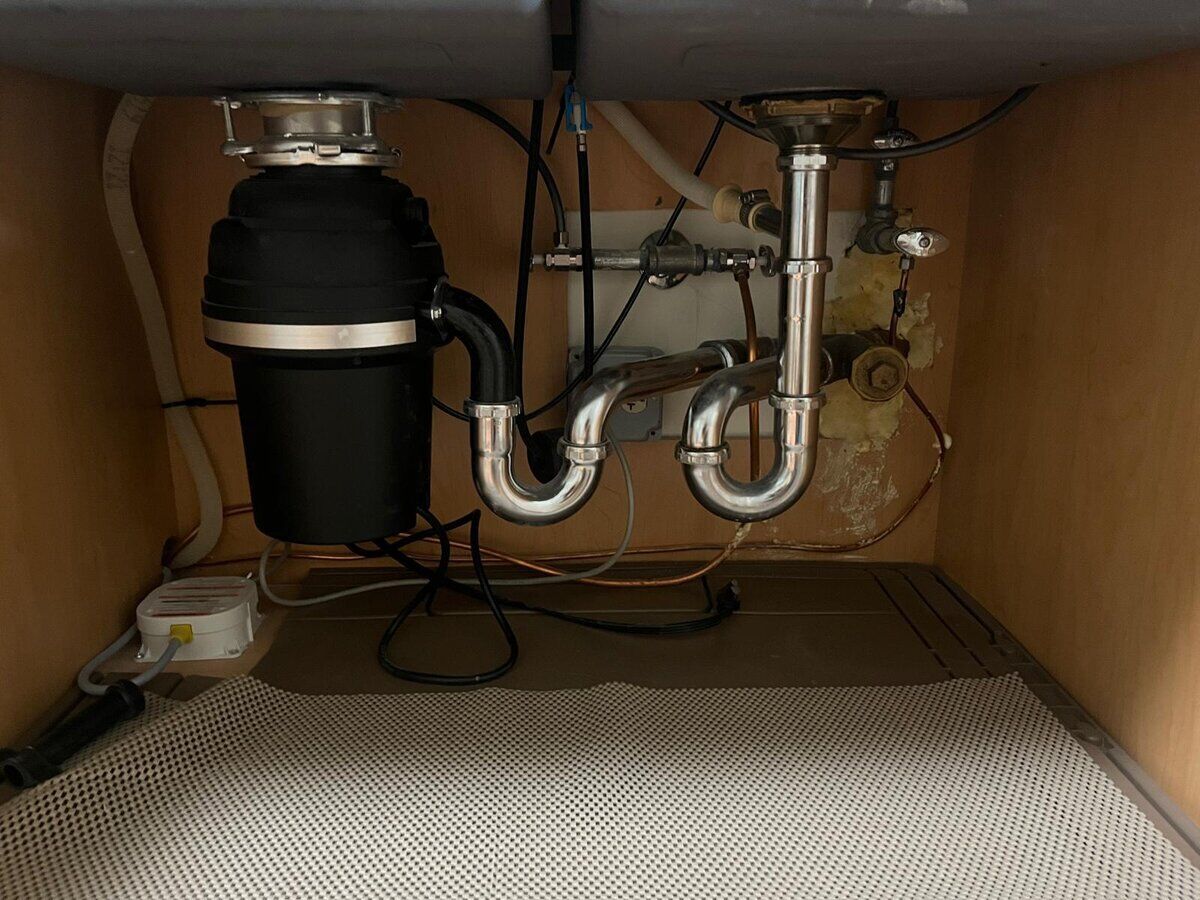
Under the sink, look for a kinked or crushed drain hose. LG notes that heavy items stored under the sink can crush it. Depending on the installation, the hose needs a high loop or an air gap so dirty sink water can't flow back into the dishwasher. Samsung notes the same. If you'd have to pull the dishwasher out to reach the hose, leave it for a technician.
Step 3: Check under the sink
Most built-in dishwashers drain into the garbage disposal or the sink drain, so a clog there stops the dishwasher too.
- Sink draining slowly too? The clog is likely in the house drain, not the dishwasher. That's a plumbing job.
- Garbage disposal: run it to clear food before starting the dishwasher. Never put your hand inside.
- New disposal or new dishwasher? The disposal's dishwasher inlet has a knockout plug that must be removed when it's installed. Whirlpool, KitchenAid, LG and Thermador all list this. If draining stopped right after an install, ask the installer to check it.
- Air gap: the small cap beside the faucet. Clean it as the manufacturer describes.
Step 4: Rule out suds
Hand dish soap or too much detergent can fill the tub with foam and stop it from draining. If you see suds, turn the dishwasher off, let them settle, follow your manual to clear them, and use only automatic dishwasher detergent.
Dishwasher drain error codes by brand
If your display shows a code, write it down. Here's what the common drain codes mean, according to each manufacturer:
| Brand | Code | What it means |
|---|---|---|
| Bosch | E24 | Drain problem, such as a blocked filter or drain hose |
| Bosch | E25 | Drain pump blocked, or its cover is loose or missing |
| Bosch | E15 | Water in the base (leak protection). Turn off the water and call for service. |
| Thermador | E24 / E25 | Drain filter blocked / drain pump blocked or cover loose |
| Whirlpool, KitchenAid, Maytag, Amana | F9E1 | Long drain, can't drain: check the filter, hose and disposal knockout plug |
| LG | OE | Not draining properly, usually a food clog or an installation issue |
| Samsung | 5C, 5E, OC, OE | Drain or overflow error |
| Miele | F11 | Drain fault. There may be water in the wash cabinet. |
| Cove (Sub-Zero) | 80 01 40 / 80 01 86 | Drain pump ran too long / poor draining |
A code on one brand can mean something different on another. Always confirm in the manual for your exact model.
Dishwasher not draining: common problems by brand
Everyday brands
Whirlpool, Maytag & KitchenAid
All share the same F9E1 drain code. The usual causes: a dirty filter, a kinked hose, or a disposal knockout plug that was never removed. A little water below the filter is normal.
LG
LG says an OE error usually comes from food debris inside the dishwasher or an installation issue like a kinked hose. Clean the filter, straighten the hose, and check the air gap and disposal.
Samsung
Samsung says the problem is often the sink's drain, not the dishwasher. Clear the disposal, clean the filter and drain area, and check the hose for kinks.
GE & GE Profile
GE says excess water in the bottom of the tub is the sign of a drain problem. Repair data points most often to a failed drain pump, a cracked drain hose or the control board.
High-end and luxury brands
Premium dishwashers fail for many of the same reasons, but they often have more filters, tighter installations and brand-specific parts. If the filter and hose are clear, call a technician who knows the brand.
Bosch (including Benchmark)
The E24 and E25 codes point to the filter, hose or pump. Bosch's pump cover sits under the filter, and a loose or missing cover triggers E25. E15 means water in the base, so turn off the water and call.
Thermador
Made by BSH, the same company as Bosch. Thermador says E24 means a blocked drain filter and E25 a blocked pump or loose cover. If it's hooked to a disposal, make sure the knockout plug is out.
Miele
For F11, Miele says to clean the filter combination, the drain pump and the non-return valve, and remove kinks from the drain hose. On many models, the pump cover or valve must click back flush.
Cove (Sub-Zero Group)
Cove lists clogged filters, a kinked hose, a blocked pump, disposal or air gap, and a clogged pressure sensor. For drain errors, clean the filter, then reset the breaker for 30 seconds.
Viking
Viking doesn't publish its own drain guide, but independent repair technicians most often report a clogged filter, glass or debris jamming the drain pump, or a blocked air gap or disposal knockout plug.
Fisher & Paykel DishDrawer
Clean the drain filter and filter plate first, then check the drain hose routing. An F1 code means the flood switch has detected water in the base. Turn off the water and call for service.
Based on what's most commonly reported for each brand. Your dishwasher may have a different problem, so always have a professional confirm the cause.
Stop and call a technician if:
- Water still covers the bottom after you've cleaned everything you can safely reach
- The dishwasher hums at the end of the cycle but no water moves. The pump may be jammed or failing.
- An error code keeps coming back after you've followed your manual
- You find water on the floor. Stop using it and turn off its water supply if you can reach it safely.
- The next step would mean pulling the dishwasher out, opening the base or touching wiring
What does our technician check?
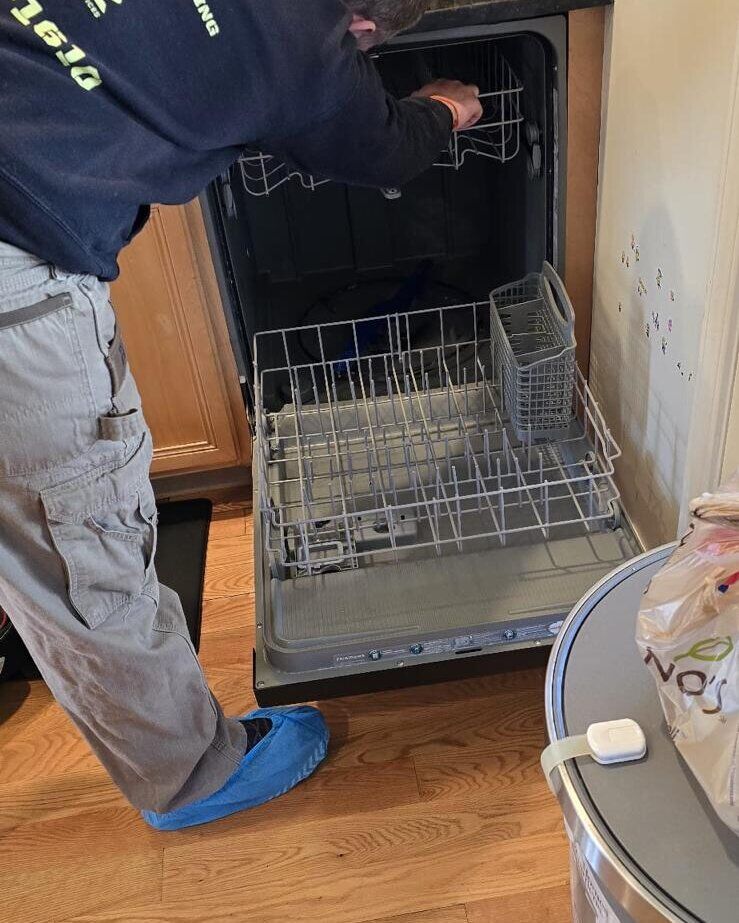
Our technician tests whether the drain pump runs and moves water, clears blockages you can't reach (in the sump, the check valve or the hose behind the unit), and reads any stored error codes before replacing a part.
What does dishwasher drain repair cost?
We charge an $89 diagnostic fee, credited toward the repair if you go ahead. We don't quote over the phone, because the same standing water can come from a clogged filter or a failed pump. You get the full price before any work starts.
Have ready when you call:
- The brand and model number, usually on a label along the edge of the door or the side of the tub
- Any error code
- Whether the sink drains normally, and whether the disposal is new
- What you've already cleaned
Quick FAQ
Why is my dishwasher not draining?
Most often a clogged filter, a kinked drain hose, a clogged disposal or air gap, or a new disposal's knockout plug. If those are clear, the drain pump may be jammed or failing.
Why does my dishwasher hum but not drain?
Usually the drain pump is jammed, often by broken glass, or is failing. Turn off the power and call a technician.
How often should I clean the dishwasher filter?
Follow your manual. Check it whenever you see standing water or food bits in the bottom, and clean it more often if you don't scrape dishes before loading.